Overview
Short visits, longer stays, one connected marketplace.
Basma is a two-sided rental platform that connects people looking for short- or long-term accommodation with landlords managing available properties. The mobile experience covers discovery, property evaluation, booking and stays for tenants, alongside listing creation, booking management and communication for landlords.
My Role
As Product Designer, I shaped the end-to-end mobile experience across information architecture, tenant and landlord flows, booking interactions, structured forms, interface design and prototyping. My focus was keeping the two roles connected while giving each one the information and actions their side of the rental journey required.
The Problem
Two rental models, two user groups, one product.
Basma needed to support short stays and long leases without splitting the experience into disconnected products. Tenants had to compare homes, terms and costs before booking, while landlords needed to describe properties, set rental rules and manage different booking details. The design challenge was to make those paths distinct where necessary and consistent where they intersected.
The Goal
Make every rental path clear from listing to stay.
The goal was to help tenants find and book the right type of stay while giving landlords a structured way to publish properties and manage the bookings that followed.
How I Kicked Things Off
Starting with the shared rental journey.
I framed the tenant and landlord journeys as two sides of the same transaction, then mapped where they meet: rental type, property information, dates, pricing, deposits, rules, booking status and communication.
From there, I separated the requirements that change between short- and long-term rentals and organized the densest tasks—property evaluation, payment review and listing creation—into focused sections and progressive steps.
The Solution
A marketplace designed from both sides.
The final experience gives tenants a clear path from discovery to an active stay, while giving landlords the controls needed to publish properties and manage each booking model.
Making property discovery easy to scan
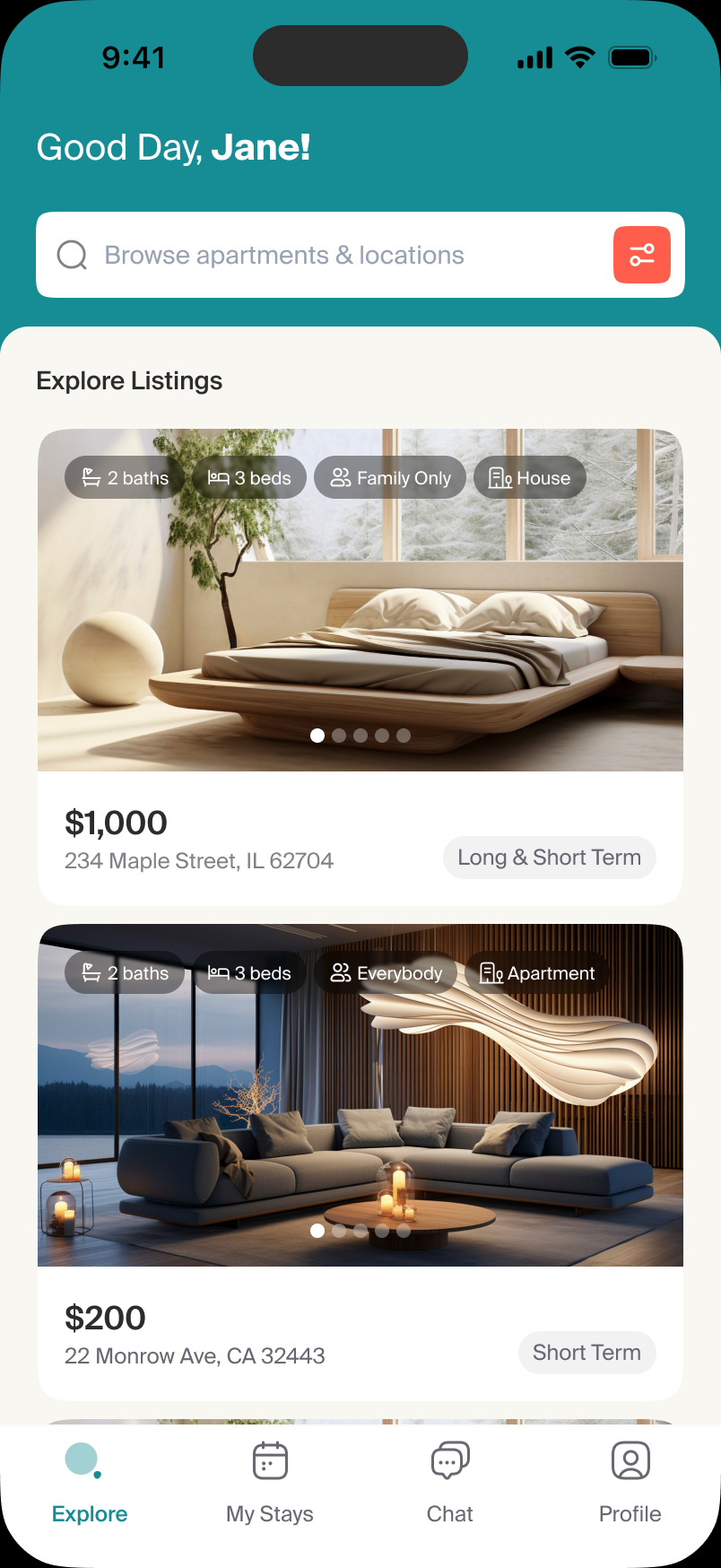
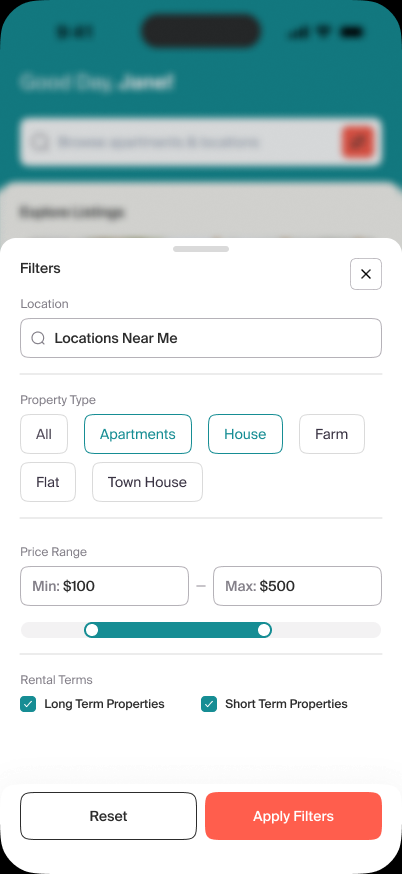
Explore presents each property with its price, address, rental term and key attributes before a tenant opens the listing. Filters bring location, property type, price range and rental terms into one focused sheet, helping tenants narrow the same inventory without leaving the browsing context.
Helping tenants evaluate a property
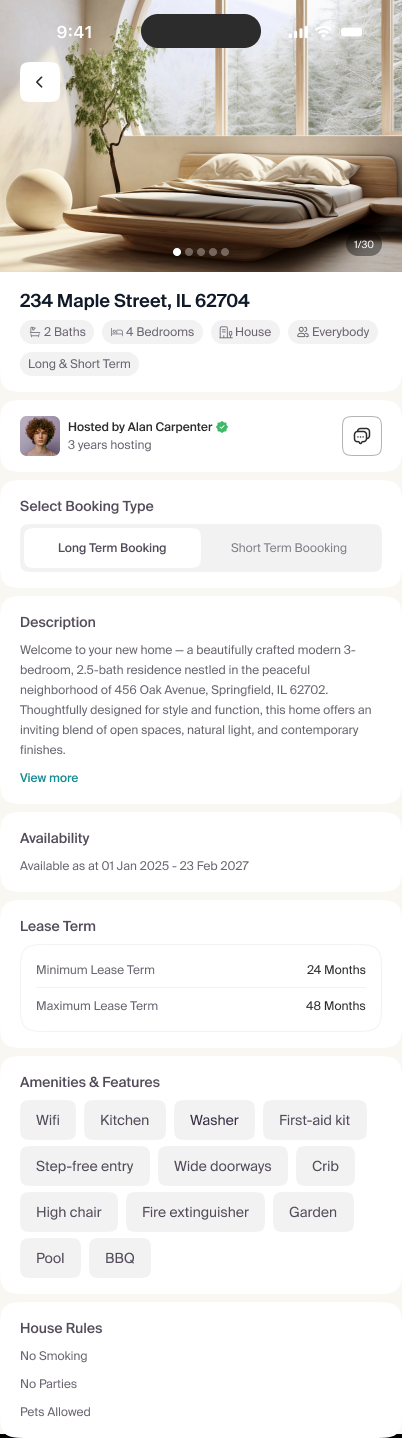
The property page layers information in the order a tenant needs it: imagery and essential attributes first, then host context, booking type, availability, lease terms, amenities and house rules. Keeping the short- and long-term choice inside the same property record makes the distinction explicit without duplicating the listing experience.
Supporting short stays and long leases
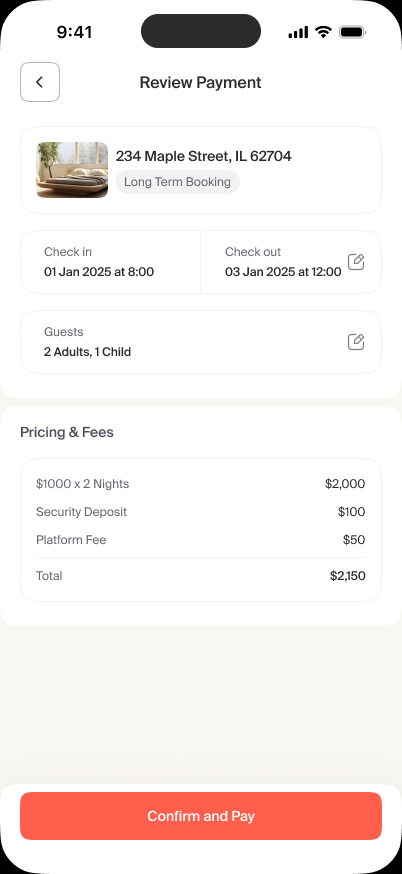
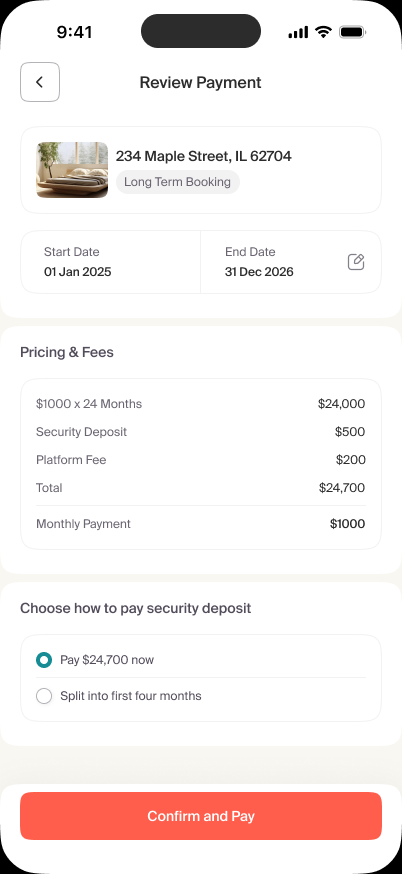
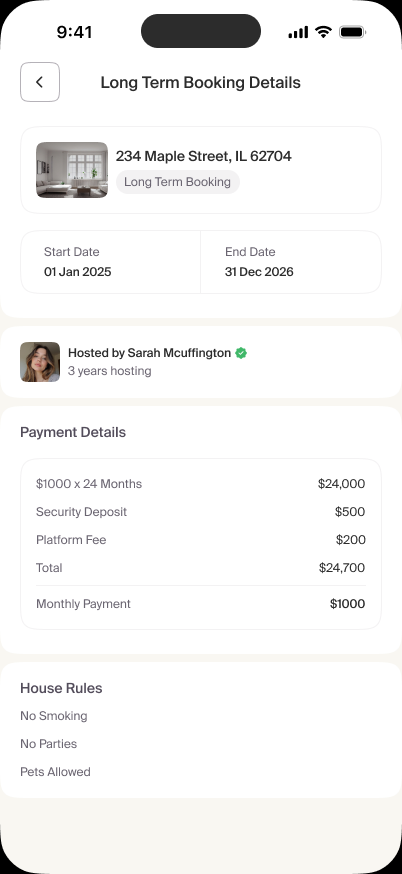
The booking review adapts to the selected rental model while preserving one familiar structure. Short-term bookings prioritize check-in, check-out, guests and nightly pricing; long-term bookings switch to lease dates, monthly pricing and security-deposit options. In both cases, the full cost is visible before payment.
Turning property creation into manageable steps
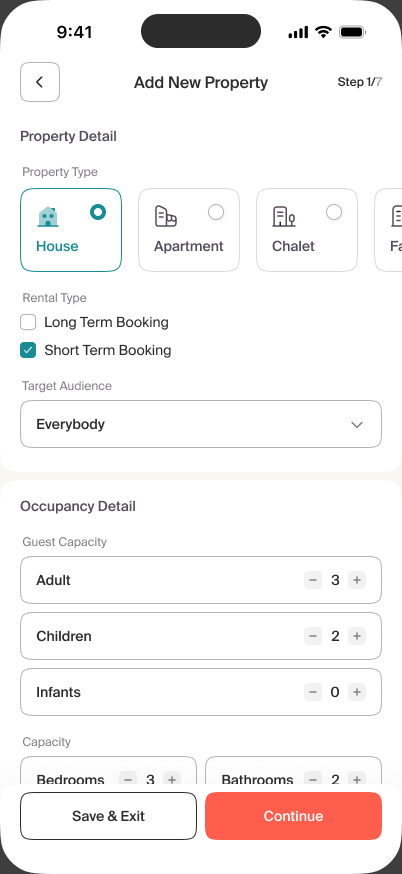
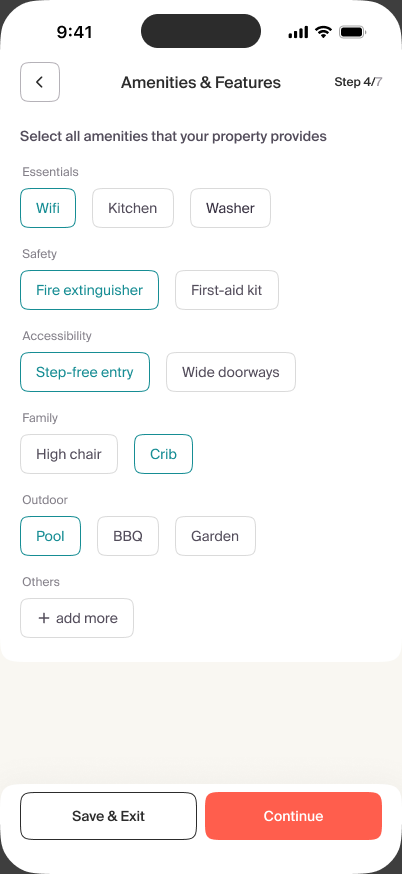
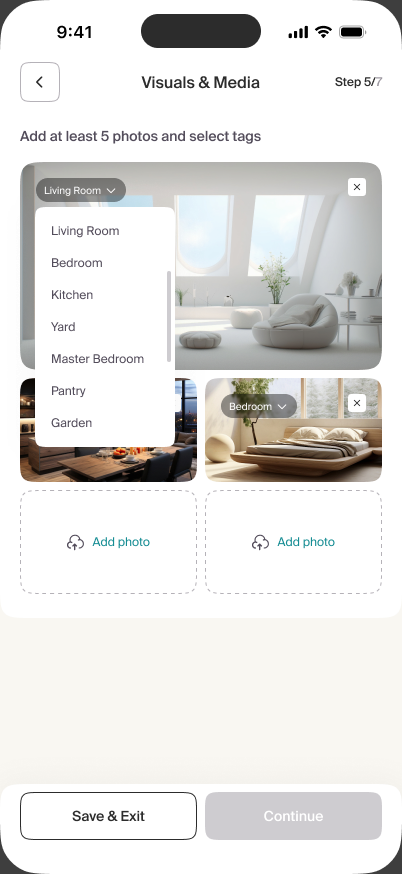
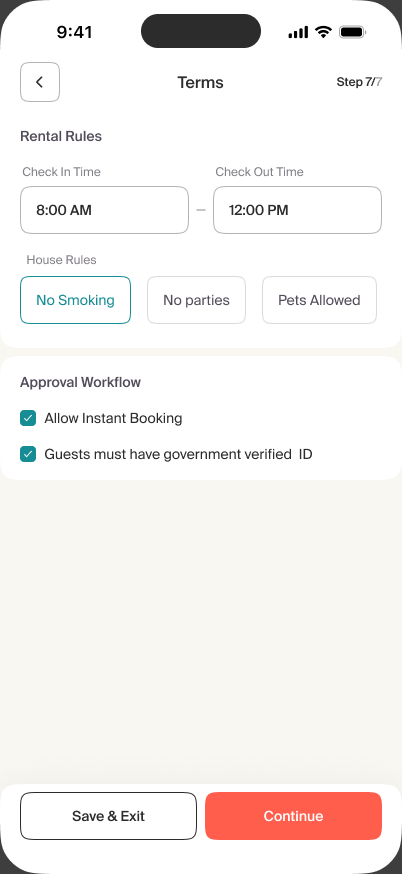
Creating a listing asks landlords for property type, rental model, occupancy, location, amenities, imagery, pricing and rules. I organized that breadth into a seven-step flow, with progress always visible and related decisions grouped together. The sequence ends with booking controls such as instant booking and verified-ID requirements.
Giving landlords control after publishing
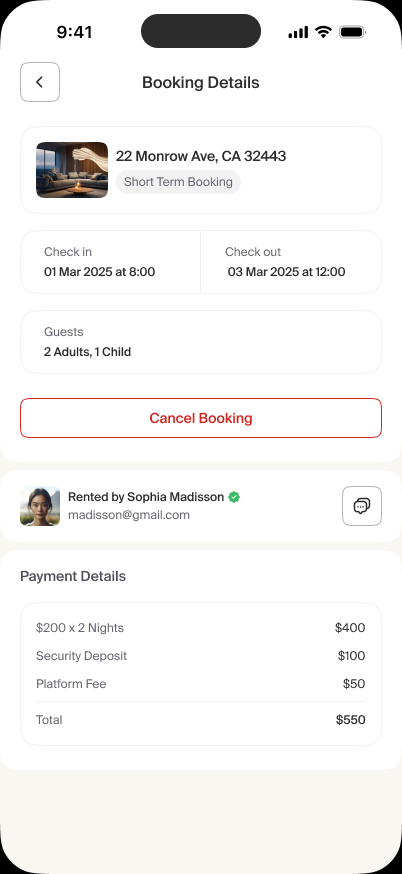
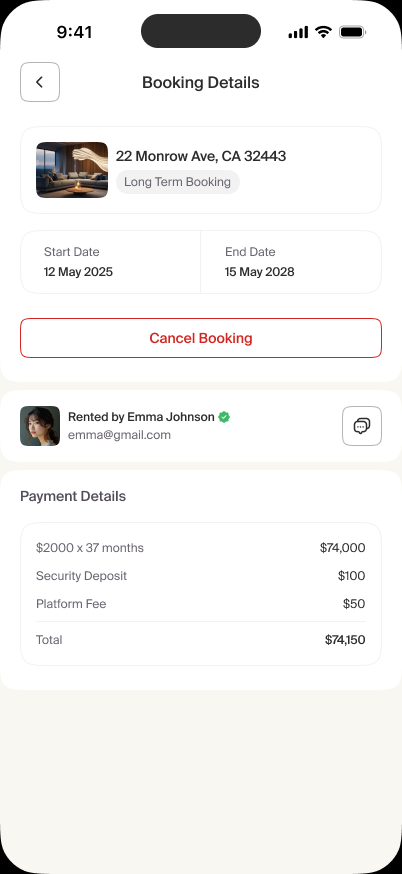
Landlord booking details bring the property, rental period, guest identity, payment breakdown and cancellation action into one record. The same layout adapts from nights and guests to lease dates and monthly terms, giving landlords the operational context for either booking type.
Keeping the relationship useful after booking
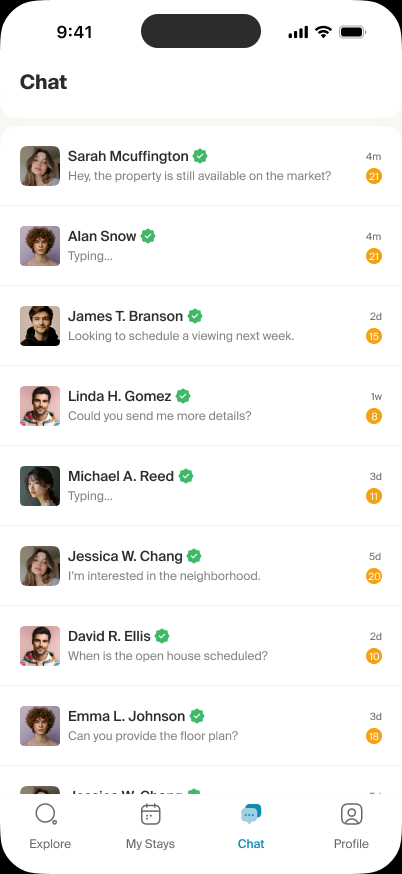
The journey continues beyond payment. Tenants can return to stay details for dates, host information, charges and house rules, while chat keeps property conversations available in the same product. Together, these views connect the transaction to the practical details of the stay.
Outcome
A connected design direction for the core rental journey.
The final design defines Basma's central tenant and landlord workflows across property discovery, short- and long-term booking, listing creation, booking management, stays and communication. Shared patterns connect both sides of the marketplace while role-specific details keep each journey focused.